


Species of the Month: April 2026
Seven-spot Ladybird (Coccinella septempunctata)
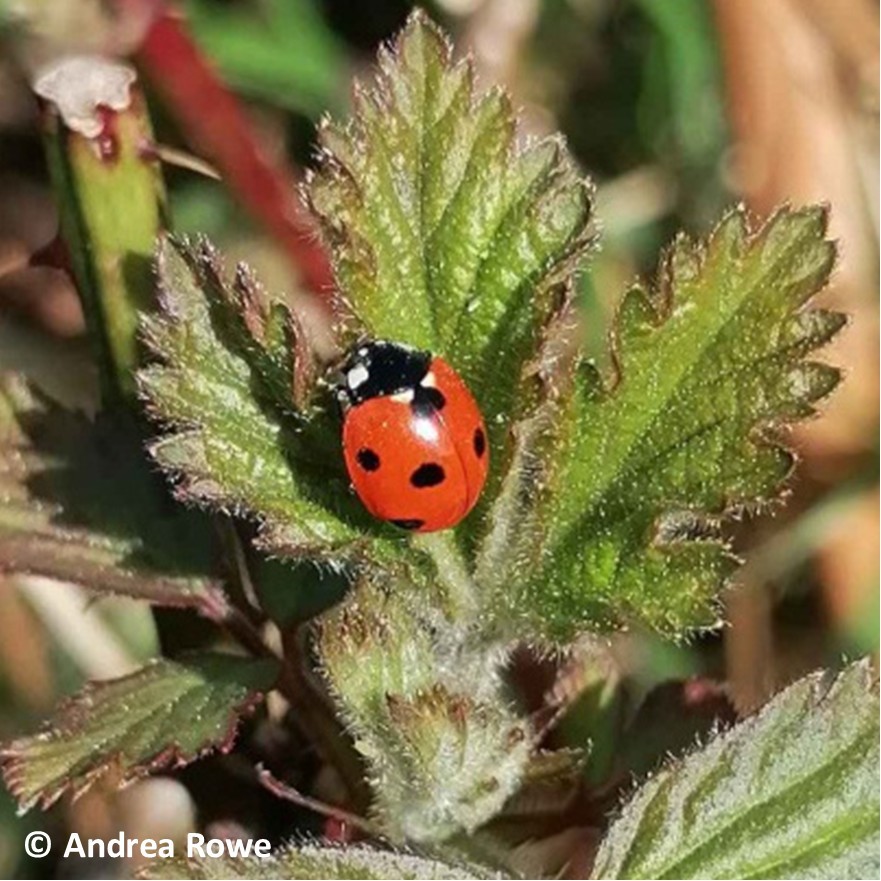
Ladybirds are one of our most recognised and beloved insects. There are 46 species of ladybird found in Britain, with only 25 being readily recognisable as a ladybird.
The Seven-spot Ladybird is one of the most common and widespread ladybird species, and can be seen from March to October. This brightly coloured beetle is rather unvariable in comparison to other species which can vary considerably in colour and number and distribution of spots. It is one of our largest ladybirds measuring around 5-8mm, and its colour pattern is a red background with black spots....usually 7 (but can range from 0-9). The pronotum is black with white markings, and their legs are black.
Seven-spot Ladybirds are found in a diverse range of habitats (including dunes, grassland, heathland, scrub, coniferous, deciduous and mixed woodland, gardens and parks). Predating on aphids, they can be found on a wide range of plants including nettle, rosebay willowherb, thistle, ragwort, heather, hogweed, rose, lavender, and many fruit and vegetable species. Seven-spot Ladybirds have a single generation each year, whereas other species may have two or more generations. Their final instar larvae are dark grey/blue-black with black tubercles and orange lateral patches.
You can learn more about Seven-spot Ladybirds from the UK Ladybird Survey
LERC Wales holds 8,474 records for Seven-spot Ladybirds in Wales, you can view the Wales-wide distribution map on Aderyn here. We hold 3,735 records of 7-spot Ladybirds in the SEWBReC area. You can view the 1km distribution map of the SEWBReC area on Aderyn here.
If you spot Seven-spot Ladybirds during April and May (or at any other time of year) please send us the record, ideally via SEWBReCORD or the LERC Wales App. Instructions on how to submit records are available here


